
Are PET & BPA-Free Plastic Containers Safe for Food?
Store your family's grains, spices and water with confidence - here's what "PET", "BPA-free" and "food-grade" really mean, and how to use plastic containers safely.
Shop BPA-Free Bottles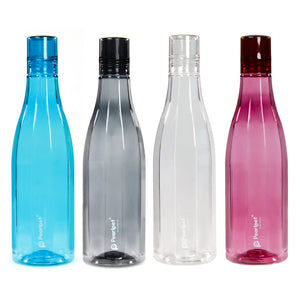

Storing food in plastic - is it actually safe?
If you store grains, spices, water or leftovers in plastic, you've probably wondered whether it's truly safe for your family's food. It's a fair question - and the honest answer is that not all plastics are the same. Terms like "PET", "BPA-free" and "food-grade" get used a lot, but they're rarely explained clearly. This guide breaks down what they really mean, what food-safety regulators say, and how to use plastic food containers safely - so you can store with confidence.
What is PET?
The clear, everyday plastic behind most water bottles and food containers.
Polyethylene terephthalate
PET stands for polyethylene terephthalate - the clear, lightweight, shatter-resistant plastic used for most water and beverage bottles and many food containers. It carries the recycling code #1.
Widely studied & approved
PET is one of the most studied and regulated food-contact materials in the world. It is approved for food and beverage contact by major authorities, including India's FSSAI, the US FDA, and the European Food Safety Authority (EFSA).
BPA-free by nature
Crucially, PET does not contain BPA and is not made with it. So a PET container is BPA-free by its very nature - there's no bisphenol A involved at any stage.
What is BPA - and BPA-free?
Understanding where bisphenol A actually shows up, and what the label really tells you.
What BPA is
BPA (bisphenol A) is a chemical used to make a different type of plastic called polycarbonate (recycling code #7), as well as some epoxy resin linings inside certain cans and older reusable bottles.
Why people avoid it
Concerns about BPA relate to its potential to act as an endocrine (hormone) disruptor at certain exposure levels, which is why many people prefer to avoid it where they can.
What "BPA-free" means
"BPA-free" simply means the product isn't made using bisphenol A. Because PET, polypropylene (PP, #5) and HDPE (#2) don't use BPA, containers made from these materials are inherently BPA-free. The label is most meaningful for polycarbonate-type hard plastics or can linings.
Are PET & BPA-free plastics safe?
A balanced look at what the science and regulators actually say.
The regulator consensus
For everyday food and water storage, PET and other food-grade, BPA-free plastics are considered safe by food-safety regulators when used as intended. That's the consensus position of FSSAI, the FDA and EFSA, which set strict limits on what can migrate from a food-contact material into food and require materials to stay well within them.
A balanced note
Like most materials, plastics are studied continuously, and you'll find ongoing scientific discussion - particularly around heat, heavy reuse and degraded containers. The practical takeaway isn't "avoid all plastic"; it's "use food-grade plastic the way it's designed to be used."
How to identify food-safe plastic
Look for food-grade labelling, then check the recycling code in the triangle.
#1 PET - good
Polyethylene terephthalate. Clear, lightweight and BPA-free - generally regarded as a good choice for food contact. Used for water bottles and many containers.
#2 HDPE - good
High-density polyethylene. Sturdy and BPA-free - generally regarded as a good choice for food contact, including milk jugs and storage containers.
#4 LDPE - good
Low-density polyethylene. Flexible and BPA-free - generally regarded as a good choice for food contact, such as squeeze bottles and bags.
#5 PP - good
Polypropylene. Heat-tolerant and BPA-free - generally regarded as a good choice for food contact, common in food storage and microwave-safe containers.
#3 PVC, #6 PS, #7 Other/PC - use with caution
Better to use with more caution for food, especially with heat. Code #7 (Other/PC) can include polycarbonate, which may be made with BPA.
Two quick habits
Look for "food-grade" or "food-safe" labelling, or a cup-and-fork symbol - this signals the material meets food-contact safety standards. And buy from trusted brands that state their materials are BPA-free and food-grade.
Safe-use tips for plastic containers
Mind the heat
Only microwave or fill with very hot food/liquid in containers explicitly labelled microwave-safe or heat-resistant. Standard PET bottles are made for cool and room-temperature liquids - not boiling water.
Keep out of extreme heat
Don't leave bottles in a hot car or direct sun for long periods.
Clean gently and thoroughly
Wash with mild soapy water (or as labelled). Avoid harsh abrasives that scratch surfaces.
Replace worn containers
If a container is heavily scratched, cloudy, cracked or smells off, retire it.
Use the right container for the job
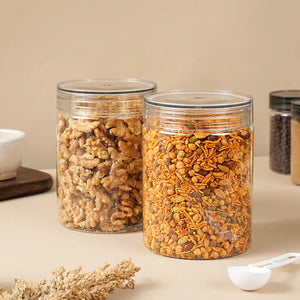
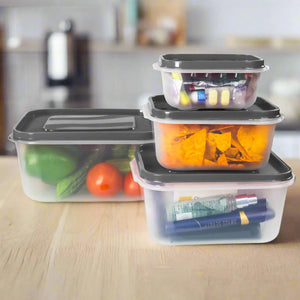
Storage jars for dry goods, dedicated bottles for water, airtight containers for snacks and leftovers.
Plastic vs steel vs glass
There's no single "best" - each material has a place. Choose food-grade, BPA-free in whichever suits the task.
Food-grade PET / BPA-free plastic
Lightweight, shatter-resistant, transparent and affordable. Great for dry storage, water bottles, kids' use and everyday handling.
Stainless steel
Durable and great for insulated or on-the-go bottles, though opaque and heavier.
Glass
Inert and premium-feeling, but heavy and breakable.
Why Pearlpet keeps your food safe
Making food storage solutions for Indian homes since 1984.
Food-grade materials
Our containers are made from food-grade, food-safe materials, designed to store everything from grains and spices to water - safely and reliably.
BPA-free PET
Pearlpet bottles are made from BPA-free PET - clear, shatter-resistant and built for everyday peace of mind when storing water.
Trusted since 1984
Decades of making food-safe storage for Indian kitchens, from snacks and leftovers to everyday essentials.
Frequently asked questions
Quick answers to the questions we hear most about plastic food storage.
Is PET plastic safe for drinking water?
Yes - PET is approved for food and beverage contact by regulators including FSSAI, the FDA and EFSA, and it contains no BPA. For best results, keep PET bottles away from high heat and replace them if they become scratched or cloudy.
Does "BPA-free" mean a container is completely safe?
"BPA-free" means the product isn't made with bisphenol A. For overall safety, also look for "food-grade" labelling and use the container as intended (especially regarding heat).
Can I put hot food or boiling water in PET containers?
Only if the container is specifically labelled microwave-safe or heat-resistant. Standard PET is designed for cool and room-temperature contents, so avoid boiling water in it.
Which plastics are safest for food storage?
Food-grade plastics with recycling codes #1 (PET), #2 (HDPE), #4 (LDPE) and #5 (PP) are generally considered good choices for food contact. Always look for food-grade labelling.
Store with confidence
Choose food-grade, BPA-free Pearlpet containers for water, grains, spices, snacks and more.